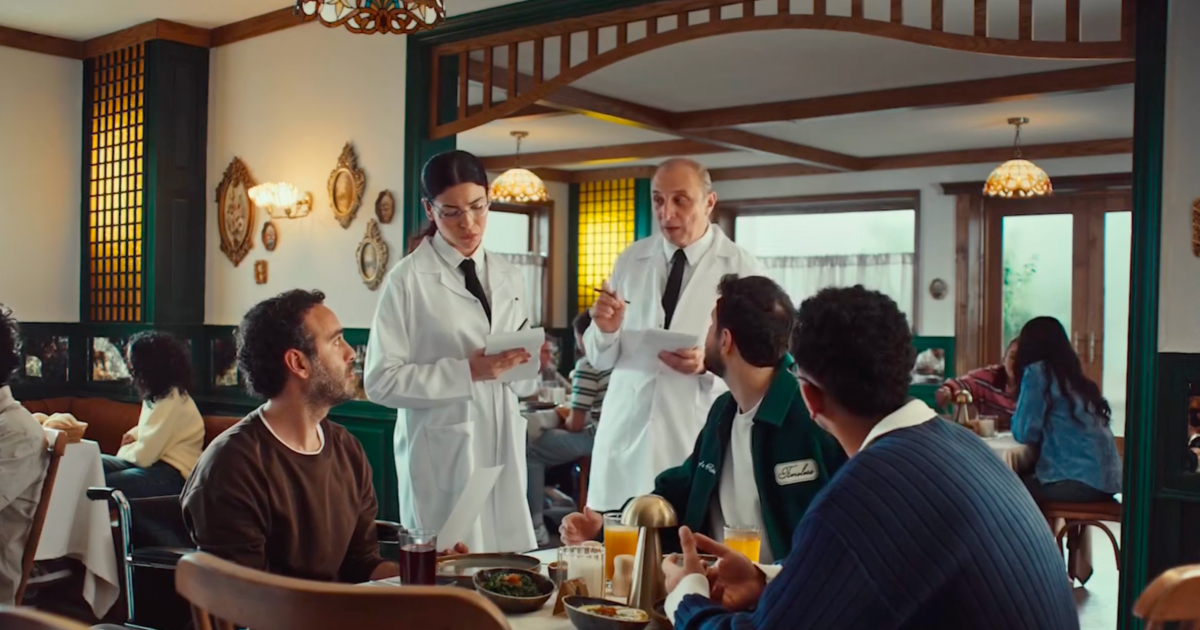
In one execution set inside a restaurant, a man orders excessive dishes for himself and his friends. A doctor suddenly steps in and informs him that he will need multiple insulin injections in the future. In another scene at a supermarket, a shopper fills a cart beyond necessity. The doctor predicts long-term medication for chronic illness.
The pattern continues across different locations. At a pastry shop, large quantities of sugary desserts trigger warnings about diabetes. At a club, oversized fried snacks prompt references to cardiovascular treatment. The diagnosis always arrives at the point of purchase.
The message is direct: what you overspend on food today will be repaid in treatment tomorrow.
The campaign was developed in collaboration with Tarek Nour Communications and DDB Egypt, reflecting a broader shift in how public institutions compete for attention during Ramadan’s high-advertising season.
Ramadan remains one of Egypt’s highest food-spending periods. Larger iftar spreads, social gatherings, and aggressive retail promotions contribute to a surge in purchasing. The Ministry states that consumption rises by nearly 100 percent during the month.
By collapsing future medical risk into the present moment, the campaign turns prevention into a visible and immediate consequence. Unlike traditional Ramadan advertising, which often promotes abundance, this initiative introduces a counter-narrative focused on moderation.
It does not criticize celebration. It targets excess.
The result is a public health message delivered with commercial storytelling discipline, designed to stand out in Egypt’s most saturated advertising window.